Profiles of 2026-2027 CRS Fellows
 Stephania Alarcón Alcalá is a Ph.D. candidate in Economics at the University of New Mexico, originally from Chihuahua, Mexico. Her research focuses on water economics, environmental policy, and water resource management, with an emphasis on household water demand, water affordability, and the economic value of water in arid regions. I enjoy working with data to answer policy-relevant questions and hopes her research can contribute to more effective and equitable water management in both New Mexico and northern Mexico. Beyond research, Stephania enjoys teaching economics, traveling, and exploring the outdoors.
 Samuel Asare is a Ph.D. candidate in Economics at the University of New Mexico, specializing in environmental and natural resource economics. His research investigates how scarce water resources can be managed to generate environmental and economic value in a warming, arid region, combining spatial econometrics, GIS, and satellite remote sensing to address pressing water policy challenges in the American Southwest. Originally from Ghana, Samuel earned his B.Sc. in Mathematics with Economics from the University of Cape Coast before completing an M.A. in Economics at New Mexico State University and the University of New Mexico. His dissertation focuses on New Mexico's Middle Rio Grande Valley and traces a connected pathway from consumptive water use to urban cooling to economic value. The work measures long-term changes in consumptive water use across the valley's communities and irrigation districts, examines whether heat exposure and access to water-supported cooling are equitably distributed across Greater Albuquerque-area neighborhoods, and estimates how the cooling services produced by urban greenery are capitalized in housing values. By translating these benefits into a water-value metric, his work can help inform water allocation decisions under increasing water scarcity and rising temperatures.
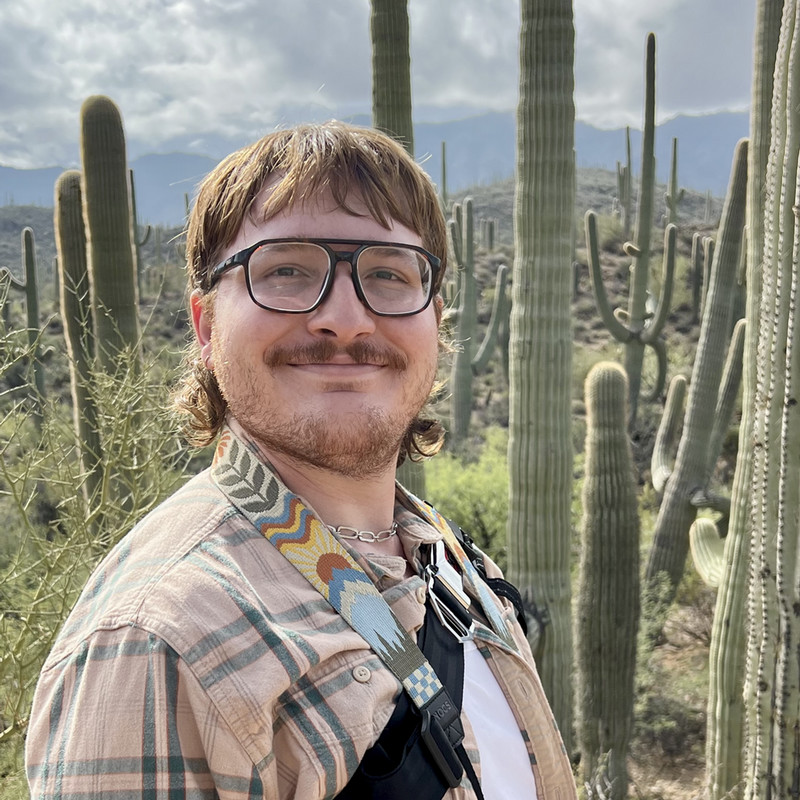 Cam Chavez Reed is a PhD candidate in Earth and Planetary Sciences. A 13th generation nuevomexicane born and raised in Albuquerque, their connections to the landscapes of the Southwest led them to interests in geosciences and critical perspectives in how we teach about land and place. Their dissertation examines the construction of all parts of landscapes from geologic processes and the ‘science of the scenery’ to the interwoven human thread of the fabric of landscapes that construct places. By engaging in transdisciplinary and decolonial perspectives of geoscience with water as a nexus of both geologic and human change in landscapes, they aim to transform how we teach about the Earth to recenter reciprocal relationships with people and land among the arid lands of the Southwest. They received a B.S. in Geosciences and B.A. in Sustainability from Arizona State University in 2021 and a M.S. in Earth and Planetary Sciences from UNM in 2024.
 Brisa del Bosque Byrnes is a Ph.D. candidate in Hispanic Linguistics. A native of Monterrey, Mexico, she has worked as a bilingual educator, curriculum developer, and teacher trainer for more than twenty years, specializing in Spanish as a Heritage Language and bilingual education. Before beginning her doctoral studies, she founded Spanish as a Heritage Language programs, developed bilingual curricula, and mentored Spanish-English educators across the United States, Canada, Australia, and Mexico. She has also homeschooled her three bilingual children for the past sixteen years, an experience that continues to inform her perspectives on bilingual language development and family language practices. Her research focuses on heritage Spanish, family language policy, linguistic ideologies, and language variation in the U.S. Southwest. As a Center for Regional Studies Graduate Fellow, her dissertation examines how immigrant parents' beliefs about heritage Spanish influence family language practices, educational decisions, and the intergenerational maintenance of Spanish in the Southwest. Drawing on qualitative interviews with immigrant families, her work explores how attitudes toward bilingualism and regional varieties shape language transmission and educational experiences. Through her research, teaching, and community engagement, Brisa seeks to support more inclusive approaches to bilingual and heritage language education that recognize the linguistic knowledge of bilingual communities while promoting language maintenance and respect for the diverse Spanish varieties spoken across the Southwest.
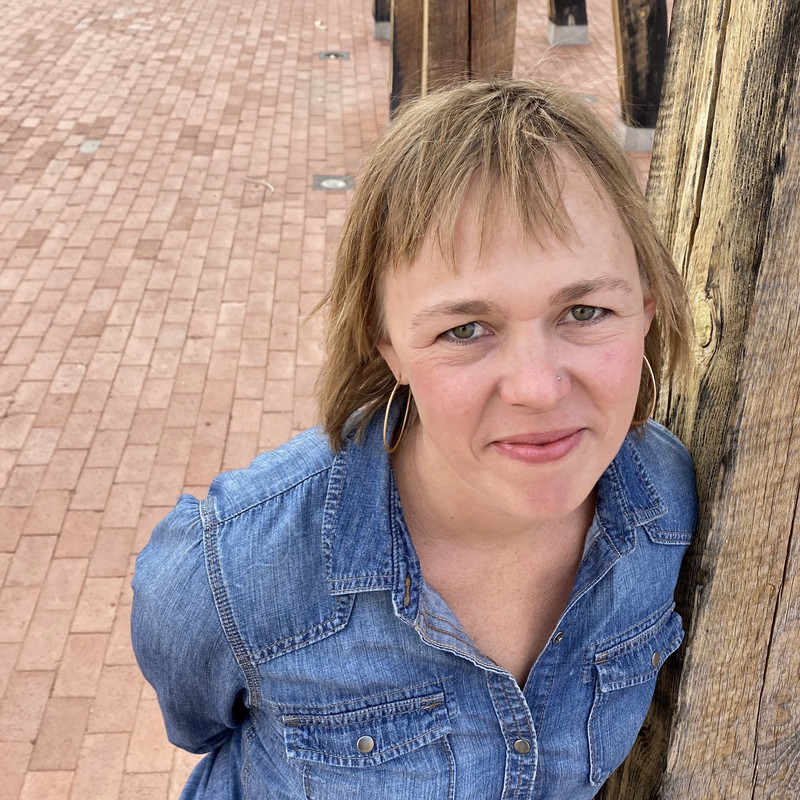 Erin Elder is a PhD student in Geography and Environmental Studies. She returns to school after 25 years in the art world where, as a curator, artist, and writer, she develops interdisciplinary projects in and about specific places. With an MA in Curatorial Practice from California College of the Arts, Erin cooperatively founded and directed PLAND, an off-the-grid residency program near Tres Piedras, NM and was the Visual Arts Director at the Center for Contemporary Arts in Santa Fe. In addition to various DIY initiatives, she has produced curatorial projects with institutions such as the Museum of Capitalism, Yerba Buena Center for the Arts, Württembergischer Kunstverein, Creative Time, the Center for Land Use Interpretation, International Symposium on Electronic Arts and the City of Albuquerque. Guided by a passion to recognize and appreciate overlooked waterways, her dissertation project uses creative methods to consider the Pecos River from source to mouth and from every angle possible, resulting in an exhibition of research materials and creative interpretations. Erin also works as an RA with the Southwest Environmental Finance Center where she is collecting oral histories from the operators of small water systems throughout the US. More info about her work at erinelder.com.
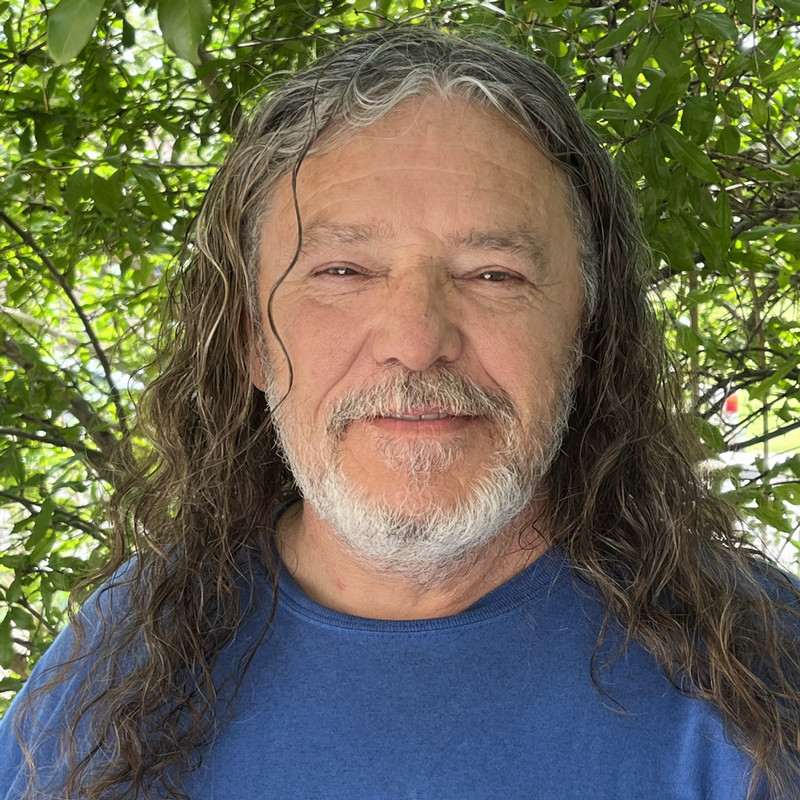 Howard Griego is a Ph.D. candidate in the Department of Chicana & Chicano Studies at the University of New Mexico. A first-generation, generational New Mexican scholar, his research centers on Nuevomexicano cultural identity, art, and resilience. His current dissertation project, completed alongside his Comprehensive Exams, examines Addiction through the integrated lenses of Querencia, Resolana, and Affect Theory, contributing new frameworks to the study of regional culture and emotional well-being. Howard holds an M.A. in Chicana & Chicano Studies, with a thesis on Nuevomexicana/o identity affirmations through muralism. As an educator and mentor, he is committed to community-engaged scholarship that bridges academic inquiry with the lived experiences of the Southwest.
 Gus Guikema is a Master's student in the Department of Geography and Environmental Studies. Originally from Aztec, New Mexico, he completed his BA in Economics and Geography at UNM in 2025. Gus’s research focuses on intersecting conflicts over elk conservation and water management in the Sacramento Mountains of southern New Mexico, a region and subject matter with which he has deep personal and family connections. Specifically, he is studying the political, economic, and ecological conditions generated by “trick tank” rain collection infrastructure built for wildlife populations in the Lincoln National Forest. The maintenance of this infrastructure now sits in bureaucratic and financial limbo, pushing elk to seek water elsewhere, especially private land, when this infrastructure fails. Through extensive backcountry field work documenting these water sources for elk and interviews with ranchers, hunters, outfitters, and biologists, Gus hopes to use this work to formulate understandings of the positions and responsibilities of humans for multispecies coexistence within climate change and shifts in rural land use.
 Jasmine Hernandez is a PhD student in Evolutionary Anthropology. She received a Bachelor of Arts in Anthropology from the University of California, Berkeley and a Master of Science in Human Skeletal Biology from New York University. She currently serves as a research assistant on a Missing and Unidentified Human Remains (MUHR) grant where she aids in the re-investigation of cold cases from the Office of the Medical Investigator (OMI) in Albuquerque, NM. As a graduate student, Jasmine also assists in tracking migrant deaths in the southern counties of New Mexico. For years, migrants have risked their lives crossing harsh terrain to enter the US along the southwestern border with many unjustly losing their lives in the process. Forensic anthropologists working in medicolegal settings aid in their identification and re-humanization. Jasmine’s research is centered on the desire to aid identification efforts through a better understanding of skeletal variation among the individuals typically classified as Hispanic in forensic anthropology with a focus on Mexican skeletal variation. As the daughter of migrants, this work is driven by her familial history and the desire to provide closure to the loved ones of the missing.
 Lacey Shanté Hites is a sociologist and higher education researcher dedicated to understanding and dismantling systemic barriers to student success. Her work sits at the unique intersection of data analysis, equity studies, and institutional policy, asking how universities can better serve their diverse student populations. As a PhD Candidate, Lacey's research investigates how college advising can either perpetuate or reduce race-gender-class inequities, with a specific focus on Minority Serving Institutions. She leverages both quantitative data and qualitative insights to paint a complete picture of the student experience. Beyond her dissertation, Lacey has managed large-scale, grant-funded projects and has practical leadership experience from her time directing a federal TRIO student support program. Her ultimate goal is to translate rigorous academic research into actionable strategies that create more equitable and effective educational systems.
 Jacqueline Kelley-Cogdell is a second-year master's student in the Geography and Environmental Studies department at the University of New Mexico. She grew up surrounded by corn and soybean fields in the small town of Cassopolis, Michigan. Following two years as a Research Associate in the Economics Department at the University of Notre Dame, they worked as a Farm Apprentice on small-scale farms in Michigan and Arizona. Her upbringing and her experiences working on farms inspired her to return to graduate school to study themes of justice and power within agriculture in the US. Her thesis project focuses on expanding and diversifying the oral history archive of farmers and growers in the Middle Rio Grande Region of New Mexico. Prior to her time at the University of New Mexico, she attained a BA in Economics from Allegheny College.
 Grace Leishman is a PhD candidate in the History department at the University of New Mexico, studying the transnational United States during the long twentieth century with a focus on Black radicalism and other social justice movements. She earned an MA of U.S. History and a BA of International Studies with a minor in History, both from UNM. Her dissertation project studies Caribbean American activist Margaret Prescod, a tireless grassroots organizer and coalition builder who cofounded Black Women for Wages for Housework and the Black Coalition Fighting Back Serial Murders. Prescod’s work helped conceive a feminist, antiracist community of women organizers from around the world, including the U.S. Southwest and East Coast, the Caribbean, the African continent, the United Kingdom, Canada, and China. Grace has been training under Dr. Tiffany N. Florvil since 2017, and she has lived in New Mexico for over thirty years.
 Kaitlin Lewis is a Ph.D. candidate in Sociocultural and Linguistic Anthropology (SCALA) at UNM. She received B.A. degrees in Anthropology and Latin American Studies from Truman State University and her M.A. in Anthropology from the University of New Mexico. As a resident and researcher of the U.S.-Mexico borderlands over the last five years, she has studied the complex histories, narratives, and identities that shape daily life across this region. Her dissertation research explores unfolding patterns of religious polarization, Mainline Protestant decline and revitalization, and faith-based political activism throughout the region and nation more generally. Across the U.S.-Mexico borderlands, religious communities navigate these changes in dialogue with powerful and contested regional, imperial, racial-ethnic, and religious histories and narratives. This project—situated in the southern New Mexico borderlands—ethnographically centers these social phenomena through the vantage point of a century-old and bilingual United Methodist Church.
Constanza Mier y Teran  is a PhD candidate in economics whose interests lie at the intersection of environmental and public economics. Her research examines the economic and societal impacts of environmental degradation and environmental regulations. Currently, she is focused on examining the effects of air pollution on health and behavior. As a fellow at the Center for Regional Studies, Constanza will analyze the effects of toxic dust from the shrinking Great Salt Lake. Constanza earned an M.A. in development studies from The University of Melbourne and a B.S. in political science and international relations from Centro de Investigación y Docencia Económicas (CIDE). Prior to her doctoral studies, she worked in policy evaluation at the United Nations Development Programme (UNDP), the Population Council and the Mexican federal government. She is a recipient of the Australia Awards and Fulbright-Garcia Robles scholarships.
 Bianca Ruiz-Negrón is a Ph.D. Candidate in the Department of Sociology and Criminology at the University of New Mexico (UNM). She was born and raised in Bayamón, Puerto Rico, but moved to New Mexico in 2021 to pursue her passion for medical sociology. She earned her M.A. in Sociology from UNM in 2023. Her research interests generally include scientific knowledge production, race and ethnicity, immigration, and mental health. In her dissertation research, she explores the thoughts and practices of mental health professionals conducting psychological evaluations for asylum seekers from Latin America.
 Saif K. Salih is a planner, designer, and GIS assistant at the Mid-Region Council of Governments (MRCOG). He earned a Bachelor of Arts in Architecture with a concentration in design from the University of New Mexico in Fall 2025 and is currently pursuing a Master of Community and Regional Planning at the University of New Mexico. During his graduate studies, he discovered a passion for planning because he believes design should serve communities and reflect their needs rather than simply the designer's vision. He is currently a Center for Regional Studies Fellow under the guidance of Professor Moises Gonzales, whose mentorship expanded his perspective on planning and connected him with community-based projects that strengthened his passion for the field. Saif's work focuses on urban design, historic preservation, and the relationship between history, culture, and community identity. He believes there is no future without the past and that planning should preserve the stories and character of places while preparing them for future generations. Through his academic and professional experience, Saif has worked directly with communities across New Mexico. In Las Vegas, New Mexico, he contributed to a research-based revitalization project that developed architectural and planning strategies to support the city's historic downtown. In Albuquerque, he helped tell the story of the historic San Miguel Village by creating a detailed physical model and an animated video that recreated daily life from the late 1600s to the early 1700s. His work was featured in the Tijeras Cultural Corrido exhibit, displayed at the Singing Arrow Community Center in Albuquerque, New Mexico. Looking ahead, Saif hopes to focus his career on rural communities and small villages throughout New Mexico. His goal is to help these communities preserve their unique identity, strengthen their quality of life, and create thoughtful plans that honor their history while supporting a sustainable future.
 Jane Sawerengera is a PhD student in Economics at the University of New Mexico. She earned MA degrees in Economics from the University of New Mexico, Binghamton University (Econometrics) and Wichita State University (International Economics), and a BSc from the University of Malawi. She previously worked as Research Associate at the Malawi Confederation of Chambers of Commerce for 3 years and had a stint as Research Associate at the Public Policy Institute of California. Her current research examines policy incentives and how they shape decisions regarding environmental resource use in agriculture amid a changing climate. Her broader research interests are in the dynamics of environmental resource use and human development. She is a research assistant at the Wang EconLab and a 2026-2027 CRS Graduate Fellow.
 Aniket Sharma is a master's student in Civil Engineering at the University of New Mexico, where he works as a Graduate Research Assistant at the Center for Pedestrian and Bicyclist Safety. His research focuses on transportation safety and human factors, including driver visual behavior, cyclist safety, and pedestrian and bicyclist risk analysis. Originally from Nepal, Aniket earned his bachelor's degree in civil engineering from Tribhuvan University in Kathmandu, where his experiences traveling between urban and rural communities sparked his interest in safe and equitable transportation. As a 2026-2027 CRS Fellow, his project examines transportation safety inequities for pedestrians and bicyclists across urban, suburban, and rural communities in New Mexico, with a focus on how low-income areas face elevated fatality risks. Through this work, he aims to inform transportation policies and support more equitable investment in road safety across the state.
 Salika Dulanjali Sooriyage is a Ph.D. candidate in the Department of Chemistry and Chemical Biology at the University of New Mexico. Originally from Sri Lanka, she earned her B.Sc. (Hons.) in Chemistry from the University of Jaffna. Throughout her academic career, she has been passionate about developing chemistry-based solutions to challenges affecting human health and the environment. Her previous research has included natural product chemistry, biomolecular engineering, and materials chemistry for biomedical and nuclear waste management applications. Her proposed CRS research focuses on developing peptide-incorporated hydrogels for the selective sequestration of radionuclides and heavy metals from water, addressing water quality challenges in New Mexico and advancing approaches for nuclear waste remediation. Beyond the laboratory, Salika is actively engaged in teaching organic chemistry laboratories, mentoring, science communication, and community engagement. She has mentored undergraduate researchers, helping them develop advanced laboratory skills and pursue research careers, and has volunteered in educational and community service initiatives at the University of New Mexico and throughout the Albuquerque community while holding leadership roles in various student organizations. Through her research, teaching, and service, she is committed to sustainability, interdisciplinary collaboration, scientific mentorship, and translating fundamental chemistry into practical solutions that benefit communities.
 Patricia Guadalupe Sotelo Chavira is a master’s student in Biology at the University of New Mexico and a graduate researcher at the Museum of Southwestern Biology. Born and raised in Albuquerque, New Mexico, she studies the evolutionary history and conservation of montane shrews (Sorex monticola) across sky island habitats in the Southwestern United States and northern Mexico. Her thesis uses museum specimens and genomic data to examine how past climate cycles shaped connectivity and divergence among isolated mountain populations. Working with colleagues from UNM, the Museum of Southwestern Biology, the New Mexico Museum of Natural History and Science, and Universidad Autónoma de Chihuahua, Patricia’s research connects regional questions about Southwestern biodiversity to broader conversations about climate change, conservation, and montane species worldwide. Through support from the Center for Regional Studies Graduate Fellowship, her work aims to identify genetically distinct populations most vulnerable to warming, drought, and wildfire.
 Angela M. Stevenson is a PhD candidate in the Department of History. Her research focuses on Civil War memory, gender, race, conservatism, and national identity. Angela’s dissertation examines women’s role in propagating the Lost Cause narrative beyond the South and investigates how this evolving memory shaped broader understandings of race, gender, and national belonging in the multicultural Southwest. She holds BA degrees in History and Anthropology with a minor in Religious Studies (New Mexico State University, 2015), a Master of Education (Eastern New Mexico University, 2017), and a MA in History (New Mexico State University, 2022).
 Libby Vigil is a PhD candidate in the Department of Sociology and Criminology at UNM. Her research interests lie at the intersection of social movements and carceral studies. She is a qualitative researcher interested in understanding meaning-making processes and advocacy approaches in support of people impacted by incarceration and immigrant detention. Her dissertation project examines how advocates across immigrant justice and anti-carceral organizing efforts understand their advocacy, including the goals and worldviews that inform their work. Libby has taught undergraduate classes in Sociology at UNM and has experience teaching and facilitating workshops in prisons in the Pacific Northwest and Argentina and detention centers in New Mexico. She graduated with an undergraduate degree in Sociology from Western Oregon University in 2019 and received her MA in Sociology from UNM in 2024.
 Ziqing Xie is a 3rd year PhD student in economics from the University of New Mexico. Her research focused on Environmental and Natural Resource Economics, Water Economics, and Development Economics. Ziqing was born in Guangzhou and raised in Beijing. She began studying abroad in high school and ultimately spent seven years in California. At UC Davis she discovered environmental economics and, inspired by Professor Boucher’s research, committed to the long-term goal of a more sustainable planet. Wanting the financial tools to turn ideas into action, she earned a master’s at King’s College London, where she focused on how capital markets can drive sustainable investment. Ziqing then moved to New Mexico to begin her PhD in Environmental and Natural Resource Economics. New Mexico’s landscapes—and the real-world challenges around water, land use, and energy—make it an ideal place for fieldwork and policy-relevant research. Her work sits at the intersection of economics and finance, with an emphasis on practical solutions that support conservation and communities.