Profiles of 2025-2026 CRS Fellows
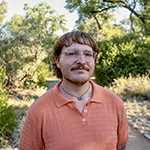 Cam Chavez Reed is a PhD candidate in Earth and Planetary Sciences. A 13th generation nuevomexicane born and raised in Albuquerque, their connections to the landscapes of the Southwest led them to interests in geosciences and critical perspectives in how we teach about land and place. Their dissertation examines the construction of all parts of landscapes from geologic processes and the ‘science of the scenery’ to the interwoven human thread of the fabric of landscapes that construct places. By engaging in transdisciplinary and decolonial perspectives of geoscience with water as a nexus of both geologic and human change in landscapes, they aim to transform how we teach about the Earth to recenter reciprocal relationships with people and land among the arid lands of the Southwest. They received a B.S. in Geosciences and B.A. in Sustainability from Arizona State University in 2021 and a M.S. in Earth and Planetary Sciences from UNM in 2024.
 Susana Echeverri Herrera is a Ph.D. student in the Department of Sociology. She originally trained as a dentist and completed a residency in periodontics at Pontificia Universidad Javeriana in Bogotá, Colombia, her hometown. Driven by a deep commitment to social justice and a passion for addressing health inequalities, she pursued further studies in the United States, where she earned a Master of Public Health from Rutgers University in 2021 and an M.A. in Sociology from the University of New Mexico in 2023. Susana grounds her research in critical border theory and disability justice, focusing on the intersection of immigration and health. Her ethnographic observations and interviews highlight the experiences of Latina immigrants diagnosed with breast cancer. Through her research, Susana reveals how U.S. borders fundamentally disable immigrants by perpetuating violence, exclusion, and disenfranchisement. These conditions contribute to adverse health outcomes and reinforce systemic inequalities that disproportionately affect immigrant communities.
 Abdul Ganiu Tanko is a master’s student in Community and Regional Planning at the University of New Mexico, specializing in natural resources and environmental planning, watershed/water resources management, community development and spatial analysis. Originally from Ghana, his work bridges global and local contexts, focusing on communities impacted by extractive industries. Abdul serves as a research assistant on an NSF-funded watershed project under Dr. Lani Tsinnajinnie. Through support from the CRS Graduate Fellowship, Abdul is advancing his professional project titled “Developing Spatial Analysis Guidance to Support Community-Based Watershed Planning which explores land and water resource vulnerabilities in the Ojo Encino and Torreon Chapters of the Navajo Nation. Through GIS-based modeling, policy analysis, and local knowledge integration, Abdul is developing tools to support Indigenous-led watershed planning and sustainable resource governance. His work reflects a commitment to equity, interdisciplinary collaboration, and the preservation of land and water for future generations across the Southwest and Sub-Saharan Africa.
 Josh Heckman-Archibeque is a Ph.D. candidate in American studies and a fellow at the Center for Southwest Research. Josh’s research focuses on the production and reproduction of working-class social relations in New Mexico. Josh was a TA/GA for four years in American Studies. They are currently teaching at CNM and was a substitute teacher with APS working at various schools like Rio Grande Highschool, Atrisco Heritage Academy, and Jimmy Carter Middle school. Josh is an experienced community activist and union organizer who has worked with organizations such as MEChA de UNM and The Red Nation. They have organized community self-defense classes through Shifting Sands Dojo for People of Color, Working folks, and the LGBTQ+ Community. Josh is a teacher, worker, martial artist, and community member.
 Lacey Shanté Hites is a sociologist and higher education researcher dedicated to understanding and dismantling systemic barriers to student success. Her work sits at the unique intersection of data analysis, equity studies, and institutional policy, asking how universities can better serve their diverse student populations. As a PhD Candidate, Lacey's research investigates how college advising can either perpetuate or reduce race-gender-class inequities, with a specific focus on Minority Serving Institutions. She leverages both quantitative data and qualitative insights to paint a complete picture of the student experience. Beyond her dissertation, Lacey has managed large-scale, grant-funded projects and has practical leadership experience from her time directing a federal TRIO student support program. Her ultimate goal is to translate rigorous academic research into actionable strategies that create more equitable and effective educational systems.
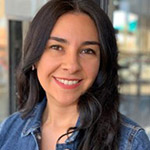 Cynthia Killough is a PhD student in the Communication and Journalism Department at the University of New Mexico, focusing on Health Communication and Culture. Her research centers on the people who act as bridges between health institutions and communities- such as community engagement liaisons, health ambassadors, and knowledge brokers- and how their own social identities shape the way health information is shared and understood. She has worked closely with Health Councils across New Mexico and values the wisdom and leadership they bring to improving community health. Born and raised in New Mexico, Cynthia is passionate about supporting population health and helping people meet their personal health goals, whatever those may look like for each individual. She is the daughter of immigrants and the proud mother of a second grader. Outside of her academic work, she enjoys playing the violin and starting her day with long morning walks. She is grateful for the steadfast support of her husband, whose encouragement has made her academic and community work possible.
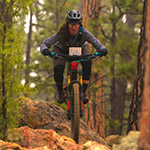 Sarah Lease is a Ph.D. candidate in the Department of Linguistics. In her research, she draws on usage-based approaches to study language variation among Spanish-speaking children and adults, primarily in the southwestern United States. In her previous research, she has examined the factors underpinning New Mexican Spanish speakers’ variation between forms like bailar and bailare both meaning ‘to dance’, as well as how NM Spanish-speaking children and adults produce “r” sounds, in words like rana ‘frog’. Aside from looking at variation in pronunciation, she has collaborated on projects that examine the factors impacting NM Spanish speakers’ morphosyntactic variation, like using esta ‘this’ or esa ‘that’ to refer to an object. Her dissertation research also focuses on variation in Spanish varieties spoken in New Mexico. The resulting archive of sociolinguistic interviews will be a source of knowledge for linguists, educators, clinicians, anthropologists, and the like, and it will contribute to the preservation and promotion of New Mexico. Within the field of linguistics, her dissertation contributes to the long-standing debate on the relative importance of ‘nature’ and ‘nurture’ for shaping language developmental pathways and language variation by examining the factors underpinning linguistic variation among New Mexican Spanish-speaking children and adults. It investigates how language experience impacts bilingual children’s development of Spanish sound patterns associated with /b,d,g/ (e.g., bote ‘boat’, día ‘day’, gato ‘cat’) as well as variation in /b,d,g/ production among older bilingual children and bilingual adults. The findings have major implications for the role of language experience and general cognitive processes in shaping developmental pathways, variation in pronunciation, and, ultimately, mental representations of language. When Sarah isn’t working on her research, she is out exploring New Mexico on her mountain bike.
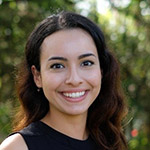 Alejandra Lemus is a Ph.D. candidate in the Sociology Department, with a concentration in medical sociology and the sociology of race and ethnicity. She received her M.A. in Sociology in 2020 and B.S. in Applied Sociology in 2017 from Texas State University- San Marcos. She has previously worked as a case worker for a non-profit organization which connects migrant families to healthcare resources and assists with continuity of care. Her dissertation research uses qualitative interviews to explore how interdependent communities, or "care webs", of Latina immigrants in the US and the people they care for navigate global systems of oppression. Through this work, she aims to bring to light the lived experiences of Latinas and their communities to understand how inequitable racialized-gendered systems affect access to care, transnational caregiving practices, and shape care labor.
 Kaitlin Lewis is a Ph.D. student in Sociocultural and Linguistic Anthropology (SCALA) at UNM. She received B.A. degrees in Anthropology and Latin American Studies in 2021 from Truman State University and her M.A. in Anthropology in 2023 from the University of New Mexico. Her dissertation research explores immigration and social advocacy in southern New Mexico and western Texas, and along the U.S.-Mexico border more generally. This ethnographic research centers how communities of faith–churches, religious nonprofit organizations, and other spiritual actors–support immigrant communities and shape broader public discourses about immigration, service to others, and the nation. As the future of immigration and advocacy along the border becomes increasingly fraught and uncertain, this project seeks to illuminate the power of narrative in shaping our sense of self, group membership, and our social world more broadly.
 Ramona Malczynski is a PhD candidate in Geography and Environmental Studies. She was born and raised in Albuquerque and throughout her academic career became increasingly interested in the processes that shape the place she loves. She is currently engaged in community organizing around many issues including environmental and urban policy. Her experiences helped define her dissertation research on the environmental history of Albuquerque in the second half of the 20th century with a focus on the relationship between humans and concrete. This research aims to provide information for community organizers in Albuquerque about which actors have had more power in defining the urban environment, what the impacts and benefits of these decisions have been and how they have been distributed among residents, as well as how Albuquerque residents engage with the built and non-human urban environment. Before returning home for her PhD, Ramona completed her BS in Earth Systems at Stanford University and her MPhil through the European Master’s in System Dynamics Programme.
 Madeline Rose Mendoza (Pueblo of Laguna, Ohkay Owingeh, Chicana) is a Ph.D. candidate in Rhetoric and Writing and a Bilinski Fellow at the University of New Mexico. She earned her M.A. in Native American Studies at the University of Lethbridge and her B.A. in English and Psychology at Austin College. Her dissertation develops Indigenous Futurisms as a critical rhetorical framework to challenge colonial epistemologies in higher education and to reimagine teaching, learning, and writing as practices of relational, decolonial futurity. She also serves as the Book Review Editor for Wicazo Sa Review and recently edited a special issue on Indigenous Futurisms.
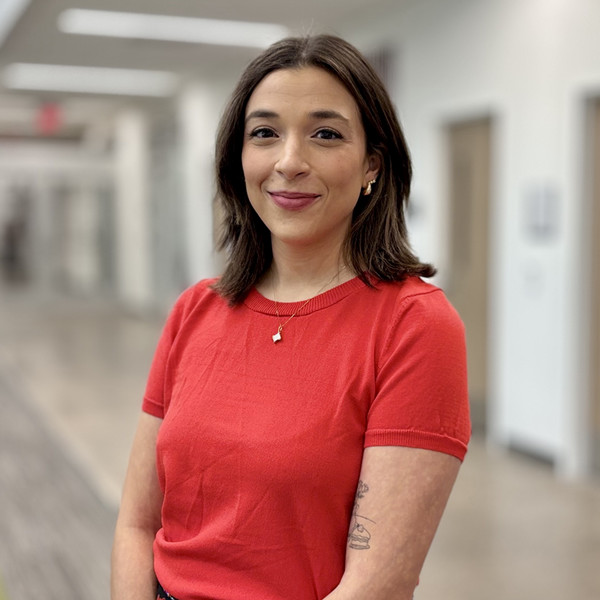 Jessica Nico, M.A., CCC-SLP, TSSLD, ASD-CS, a licensed speech-language pathologist in New Mexico and New York, is a PhD student in the Department of Speech and Hearing Sciences. Her research focuses on autism, echolalia, interprofessional collaboration, and neurodiversity-affirming practices. She manages Project MESA, provides clinical supervision, and co-founded ALIGN, UNM’s first student-led neurodiversity group. As a late-diagnosed neurodivergent Hispanic woman, Jessica aims to bridge research and practice while creating inclusive, affirming learning environments for neurodivergent students in SHS/CSD.
 Isela Rendón is a first-generation Mexican American Chicana from Albuquerque, New Mexico. She is a secondary bilingual language arts teacher pursuing a dual master’s degree in Latin American Studies and Language, Literacy, and Sociocultural Studies. Her passion is grounded in honoring and leveraging bi-multilingual students’ full language practices and cultural identities within spaces of learning. Her research centers on adolescent bi-multilingualism in the borderlands, drawing on social language learning, translanguaging, and raciolinguistics as frameworks to support students’ entire linguistic repertoires. Through her scholarship, her practice centers on creating learning spaces where students learn how to navigate both the physical and metaphysical borders of language, culture, and identity, and the lived realities of existing between multiple worlds. She has recently been recognized as a recipient of the 2025–2026 Fulbright U.S. Scholar Award to South Korea, where she will continue to serve as a language teacher abroad.
 Suyént Rodríguez Candeaux is a Ph.D. student in the Department of Sociology and Criminology at the University of New Mexico (UNM). She earned a B.A. in Psychology and Africana Studies from UNM and a M.A. in Pan African Studies from Syracuse University. Her research interests include social movements, race and ethnicity, Afrolatinidad, intersectionality, and immigration. Her dissertation project is rooted in scholarship of Black resistance and transnational mobilization. Using Cuba as a site of contestation, she contextualizes external factors and internal movement processes via participant-observations, interviews, and archival research to develop a racialized understanding of transnational mobilization. Through her dissertation project, she aims to add nuance to our understanding of the intersectional dynamics of transnational collective action.
 Bianca Ruiz-Negrón is a Sociology PhD student at the University of New Mexico (UNM). She was born and raised in Bayamón, Puerto Rico, but moved to New Mexico in 2021 to pursue her passion for medical sociology. She received her Sociology MA from UNM in 2023. Bianca’s primary research interests include knowledge production, Latinx immigrant mental health, and nation-building. As a doctoral student, her current research explores scientific knowledge production and practices around psychological evaluations for Latinx asylum applicants. Besides her academic pursuits, Bianca is a research assistant for the Refugee and Immigrant Wellbeing Project at UNM. She also loves to read and watch reality TV in her free time.
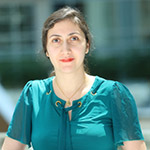 Nahid Samimi is a Ph.D. candidate in Economics at the University of New Mexico. Her research focuses on environmental and urban economics, with particular emphasis on water resource management, energy efficiency, and climate resilience. Her dissertation examines the social and economic dimensions of residential energy use and water demand, aiming to inform climate-resilient infrastructure planning and sustainable resource management. Nahid employs large-scale datasets and applied microeconomics methods to generate data-driven insights for policy development. Her broader research interests include the economic impacts of utility and climate-related policies, as well as the intersection of equity and sustainability in resource allocation.
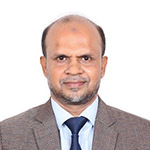 Md Shahinuzzaman Shahin’s educational background includes a BSc and MS in psychology from the University of Dhaka, where he graduated at the top of his class and received a gold medal from the President of Bangladesh for academic achievements. Since 2007, Shahin has been teaching in higher education at Jagannath University, progressing from lecturer to associate professor in 2019. He has also served as a student counselor and a trained counselor for Cyclone Sidr victims. His academic portfolio includes 24 peer-reviewed articles the textbook "Experimental Design and Statistics in Psychology, and involvement in five research projects supported by five UGC grants. Currently, Mr. Shahinuzzaman is pursuing PhD in Family and Child Studies (FCS) at the UNM, focusing on early childhood trauma and adolescent mental health. He received a CRS fellowship for researching the Efficacy of Trauma-Informed Care for Early Childhood Special Education Children: A Cross-Cultural Systematic Review.
 Holly Smith Holly is in the second year of the master's degree program in the History Department at the University of New Mexico, majoring in Latin American History and minoring in American History. She received her bachelor's degree in history and political science with a minor in Spanish from the University in Florida in 2023. Her research focuses on the development of national and transnational medical solidarity in Latin America during the Cold War, exploring how physicians conceptualized a medical class through strikes and protests against their employers. At a time of rapid development in communications, technology, and state surveillance tools, Holly's research indicates that Latin American doctors balanced a myriad of roles in their efforts to influence tangible change: political actors, educated professionals, servants, and laborers. She is excited to present her work at the Rocky Mountain Interdisciplinary History Conference in October of 2025.
 Hennessey Star is a PhD student in American Studies at the University of New Mexico with a BA in Religion, Spirituality, and Society from the University of Puget Sound. Her research is focused on the role of the incarceration of girls and welfare institutions in the Southwest on the continued colonization of the region through the carceral enforcement of white settler femininity, domesticity, and familial values. Hennessey engages in place-based and critical archival research that position the nation-wide, Protestant project of reforming delinquent girls and the construction of girlhood within the specificities of the Southwest region, primarily focusing on the Girls’ Welfare Home in Albuquerque, the House of the Good Shepherd in Mesilla Park, and Lorretta Academy.
 Angela M. Stevenson is a PhD candidate in the Department of History at the University of New Mexico. Her research focuses on Civil War memory, gender, race, conservatism, and national identity, with a regional emphasis on the American Southwest. Her dissertation examines women’s role in propagating the Lost Cause narrative beyond the South and investigates how this evolving memory shaped broader understandings of race, gender, and national belonging in the multicultural Southwest. She holds BA degrees in History and Anthropology with a minor in Religious Studies (New Mexico State University, 2015), a Master of Education (Eastern New Mexico University, 2017), and a Master of Arts in History (New Mexico State University, 2022). She is a former middle school history teacher and currently lives in Las Cruces, New Mexico.
 Cassidy Tawse-Garcia
Originally from Colorado, Cassidy holds a BA in Journalism & Political Science from the University of Colorado, and a Masters in Environmental Management from Western Colorado University. She is a PhD Candidate in the Dept. of Geography & Environmental Studies at UNM in Albuquerque. She studies cultural and economic geographies of the US Southwest & Latin America. Her dissertation research explores rural communities’ responses to the 2022 Hermit’s Peak and Calf Canyon Wildfire in Northern NM, which burned nearly 350,000 acres and is that state’s largest wildfire to date. She studies rural community response to climate crises, and the roles of collective care in disaster recovery. Cassidy is engaged with UNM’s El Centro de La Raza, the Transformation Network, a convergence science research initiative, the Community Economies Research Network (CERN), the Transect of the Americas research collaborative, the American Association of Geographers JEDI committee, and UNM’s Robert Mallory Center for Community Geography. She holds a Graduate Teaching Certificate from UNM and is a Faculty Member in Geography at Central New Mexico Community College (CNM). She teaches World Regional Geography & Physical Geography.
 Natalia M. Toscano is a Ph.D. candidate in the department of Chicana/o Studies. Natalia is a proud transfer student who attended Santa Monica College and transferred to UCLA, obtaining her bachelor’s degree in Chicana/o Studies and American Studies. Following her undergraduate studies, Natalia obtained her master’s in American studies at the University of New Mexico. Currently, Natalia’s dissertation explores the history of exchange between Chicanx organizations, collectives, and networks with the Zapatistas. Examining how Zapatismo as a mode of leftist thinking has influenced and shaped Chicanx radical thought and threads of organizing. She has published in Kalfou: A Journal of Comparative and Relational Ethnic Studies and Grietas: A Journal of Zapatista Thought and Horizons. Natalia supports the practice of public scholarship by serving as a co-editor in chief for Regeneraciòn: A Xicanacimiento Studies Journal. Her scholarship has been generously supported by the Ford Pre-doctoral fellowship and the Center for Regional Studies fellowship.